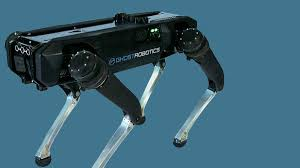
India has made significant achievements in developing the AI-powered MULE. The robot is a product of the DRDO's Centre for Artificial Intelligence and Robotics (CAIR). The CAIR is a leading research center in the field of AI and robotics, and it has played a key role in developing the MULE. The Multi-utility Legged Equipment (MULE) is an autonomous load-bearing robot developed by India's Defence Research and Development Organisation (DRDO). It is equipped with artificial intelligence (AI) to navigate complex terrain and perform a variety of tasks, including transporting supplies, carrying wounded soldiers, and providing reconnaissance. The development of the AI-powered MULE is a major achievement for India. It demonstrates India's growing capabilities in the field of AI and robotics. The MULE is also a significant advancement in military robotics. It is the first AI-powered load-bearing robot to be developed in India, and it has the potential to revolutionize modern warfare...
On February 3rd, 2024, a historic moment unfolded in Visakhapatnam as the Indian Navy formally commissioned its first Survey Vessel (Large), INS Sandhayak . This marks a significant leap forward in the Navy's hydrographic capabilities, bolstering its ability to map the vast Indian Ocean region with greater precision and detail. More Than Just a Ship: Sandhayak is not just another vessel; it's a powerhouse of advanced technology. Displacing 3, 400 tons and stretching 110 meters long, it's equipped with cutting-edge hydrographic equipment. This includes: Data Acquisition and Processing System: Processes and analyzes the collected data for detailed mapping. Autonomous Underwater Vehicle (AUV): Conducts independent underwater surveys, reaching depths inaccessible to ships. Remotely Operated Vehicle (ROV): Provides high-resolution underwater visuals for specific areas. DGPS Long-range Positioning Systems: Ensures accurate positioning and navigation. Digit...
The Indian Navy is all set to join the global elite club tomorrow when Prime Minister Manmohan Singh formally launches the indigenously-built nuclear-powered submarine INS Arihant at the Naval Dockyard of the Eastern Naval Command in Visakhapatnam. Prime Minister will arrive at the ENC's airbase INS Dega in Visakhapatnam by a special IAF plane along with his wife at 11 am and drive straight to the Naval Dockyard to commission INS Arihant into the sea. The 6000-tonne submarine will first be put on sea trials for two years before being commissioned into full service. In the two years, the submarine will also undergo harbour trials of its nuclear reactor and other systems. Tomorrow's launch of the submarine coincides with the "Vijay Diwas" marking India's triumph over Pakistani intruders in Kargil.




Comments