Posts

INS Sandhayak Charts Its Course: Indian Navy's new era as First Survey Vessel Joins the Fleet

Image
On February 3rd, 2024, a historic moment unfolded in Visakhapatnam as the Indian Navy formally commissioned its first Survey Vessel (Large), INS Sandhayak . This marks a significant leap forward in the Navy's hydrographic capabilities, bolstering its ability to map the vast Indian Ocean region with greater precision and detail. More Than Just a Ship: Sandhayak is not just another vessel; it's a powerhouse of advanced technology. Displacing 3, 400 tons and stretching 110 meters long, it's equipped with cutting-edge hydrographic equipment. This includes: Data Acquisition and Processing System:  Processes and analyzes the collected data for detailed mapping. Autonomous Underwater Vehicle (AUV):  Conducts independent underwater surveys,  reaching depths inaccessible to ships. Remotely Operated Vehicle (ROV):  Provides high-resolution underwater visuals for specific areas. DGPS Long-range Positioning Systems:  Ensures accurate positioning and navigation. Digit...
India To Receive Most Advanced Weapon Systems From USA Including MQ 9B Drones, Hellfire Missiles

Image
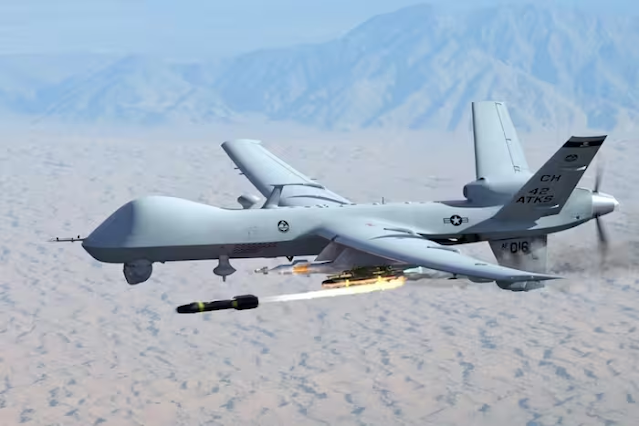
In a significant development solidifying the strategic partnership between the United States and India, the Biden administration on Thursday notified Congress of its intention to sell nearly $4 billion worth of advanced weaponry to India. This landmark deal, dominated by the sale of 31 MQ-9B armed drones, marks a major boost for India's defense capabilities and strengthens its position as a key player in regional security.

India's Ambitious Plan: Launching 50 Satellites in Next Five Years for Geo-Intelligence

Image
In a bid to bolster its geo-intelligence capabilities, India has set its sights on an ambitious plan to launch 50 satellites within the next five years. This initiative aims to create a comprehensive layer of satellites operating across various orbits, enhancing the nation's capacity to monitor troop movements and capture high-resolution imagery spanning thousands of kilometers. The announcement came from the Chairman of the Indian Space Research Organisation (ISRO), S Somanath, during his address at 'Techfest,' an annual science and technology event hosted by the Indian Institute of Technology Bombay. Somanath highlighted the imperative for India to substantially expand its satellite fleet, stressing that the current size falls short of the nation's aspirations. He emphasized the need for a satellite network "ten times what we have today" to fortify India's position as a formidable global entity. Describing these defense intelligence-gathering satellites ...

India's Missile Prowess: Pralay Test-Fire a Strategic Game-Changer

Image
In a significant boost to India's defense capabilities, the country on November 7 successfully test-fired its indigenously developed surface-to-surface short-range ballistic missile (SRBM) 'Pralay' from the Integrated Test Range (ITR) at Abdul Kalam Island off the coast of Odisha. The missile, launched at around 9: 50 AM, meticulously followed its predetermined trajectory and accurately hit its designated target, meeting all mission objectives with remarkable precision. This successful test-fire marks a crucial milestone in India's unwavering commitment to strengthening its defense arsenal. Developed by the Defence Research and Development Organisation (DRDO), 'Pralay' is a testament to India's growing prowess in missile technology. With a range of 350-500 kilometers and a payload capacity of 500-1, 000 kilograms, 'Pralay' is a potent weapon capable of delivering a devastating blow to adversary targets. The missile's impressive capabilit...

Air Force successfully fires extended range air-launched Brahmos missile

Image
The Indian Air Force (IAF) successfully test-fired an extended-range (ER) variant of the air-launched BrahMos missile on Wednesday, October 18, 2023. The missile was fired from a Sukhoi-30MKI fighter jet and successfully struck a target over 1,500 kilometers away with precision. The extended-range BrahMos missile has a maximum range of 400 to 500 kilometers and can strike land and sea targets at supersonic speed. It is a joint venture between India and Russia and is considered to be one of the most advanced cruise missiles in the world. The successful test-firing of the extended-range BrahMos missile is a significant milestone for the IAF. It gives the IAF the ability to strike high-value targets deep inside enemy territory from a safe distance. It also gives the IAF a strategic edge in any potential conflict with its neighbors. BrahMos The BrahMos missile is named after the Brahmaputra and Moskva rivers, which flow through India and Russia respectively. The BrahMos missile is the fast...

India's NavIC Navigation System Now Supported on Apple iPhone 15 Pro and Pro Max

Image
In a major achievement for India, Apple has announced that its recently launched iPhone 15 Pro and iPhone 15 Pro Max models will support India's indigenous alternative to GPS, NavIC (Navigation with Indian Constellation). This is the first time Apple has introduced NavIC support to any of its iPhone models. NavIC is a regional navigation satellite system developed by the Indian Space Research Organisation (ISRO). It became operational in 2018 and provides accurate positioning and timing information over India and the surrounding regions. NavIC is designed with a constellation of 7 satellites and a network of ground stations. The inclusion of NavIC support on the iPhone 15 Pro and Pro Max models is a significant development, as it will make these devices more appealing to Indian consumers. It will also help to promote the adoption of NavIC in India and around the world. In addition to its benefits for consumers, NavIC is also strategically important for India. It reduces India's...

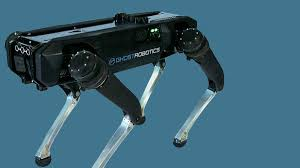
India's AI-powered MULE: A testament to India's growing capabilities in AI and robotics

Image
India has made significant achievements in developing the AI-powered MULE. The robot is a product of the DRDO's Centre for Artificial Intelligence and Robotics (CAIR). The CAIR is a leading research center in the field of AI and robotics, and it has played a key role in developing the MULE. The Multi-utility Legged Equipment (MULE) is an autonomous load-bearing robot developed by India's Defence Research and Development Organisation (DRDO). It is equipped with artificial intelligence (AI) to navigate complex terrain and perform a variety of tasks, including transporting supplies, carrying wounded soldiers, and providing reconnaissance. The development of the AI-powered MULE is a major achievement for India. It demonstrates India's growing capabilities in the field of AI and robotics. The MULE is also a significant advancement in military robotics. It is the first AI-powered load-bearing robot to be developed in India, and it has the potential to revolutionize modern warfare...

Second only to US IAF & Navy to get DRDO's CHAFF tech for protecting Aircrafts and Ships from enemy missile

Image
The Indian Air Force and Navy have partnered with the Defence Research and Development Organisation to acquire the CHAFF technology, which protects warships from anti-ship missiles during combat. After the United States, India is now the second country to develop this capability, signalling a major Aatmanirbhar push in the field of defence. The development is significant because the Indian navy is investigating the sinking of the Russian missile cruiser Moskva and concentrating on how to protect our warships from anti-ship ballistic missiles such as the Chinese DF-21. What exactly is CHAFF? CHAFF is a critical defence technology that protects fighter planes and naval ships from enemy radar-guided missiles during wartime. The importance of this technology stems from the fact that a small amount of CHAFF material deployed in the air acts as a decoy to deflect enemy missiles, ensuring the safety of fighter planes and naval ships. This advanced CHAFF technology was developed by the DRDO to...

Army, IAF induct advanced Israeli ‘tank killers’ - that helped Ukraine destroyed hundreds of Russian tanks and other armored vehicles

Image
In the midst of a two-year military standoff with China in eastern Ladakh, the Army and IAF have begun to induct advanced Israeli anti-tank guided missiles (ATGMs) with longer ranges and greater armour-penetration capabilities. Last year, the Israeli 'tank killers' were ordered as part of emergency procurements in response to the ongoing troop standoff with China, which has yet to de-escalate. During the ongoing conflict between Russia and Ukraine, such weapons have proven to be extremely useful. Since the conflict began on February 24, Ukrainian troops armed with US-made Javelin ATGMs and western next-generation light anti-tank light missiles (NLAWs) have destroyed hundreds of Russian tanks and other armoured vehicles. The Israeli Spike ATGM family is just as lethal and versatile. The Army will receive the Spike LR-2 launchers and missiles, which have a ground strike range of 5.5 kilometres, while the IAF will equip its Russian-made Mi-17 V5 armed helicopters with Spike NLOS (...

Sixth Scorpene-class submarine ‘INS Vagsheer’ launched in Mumbai

Image
On Wednesday, defence secretary Ajay Kumar launched INS Vagsheer, the sixth Scorpene-class submarine under Project-75, at Mazagon Dock in Mumbai, giving India's naval fleet a boost. The sandfish, a deadly deep-sea predator of the Indian Ocean, inspired Vagsheer's name.  The Indian Navy has so far received four Scorpene-class submarines from the Mazagon Dock so far: INS Kalvari INS Khanderi INS Karanj INS Vela.  INS Kalvari was the first submarine to be launched in October 2015 and commissioned in December 2017. The second, the INS Khanderi, was launched in January 2017 for sea trials and commissioned in September 2019; the third, the INS Karanj, was launched in January 2018 and commissioned in the Indian Navy on March 10, 2021, after two years of sea trials. INS Vela, the fourth submarine, was launched in May 2019 and will be delivered to the Indian Navy in November 2021.  The fifth submarine, dubbed 'Vagir,' is currently under trial at sea and is expected to be comm...

IAF successfully test fires BrahMos Missile from Sukhoi-30 Jet with a "Direct Hit"

In demonstrating its operational preparedness, the Indian Air Force (IAF) on Tuesday successfully test-fired a BrahMos supersonic cruise missile from a Sukhoi fighter jet on the Eastern seaboard. The "live firing" of the missile was carried out in close coordination with the Indian Navy, the IAF said. The missile hit the target with accuracy and precision, officials said. "Today on the Eastern seaboard, #IAF undertook live firing of #BrahMos missile from a Su30 MkI aircraft. The missile achieved a direct hit on the target, a decommissioned #IndianNavy ship. The mission was undertaken in close coordination with @indiannavy," the IAF said in a tweet. In 2016, the government had decided to integrate the air-launched variant of the Brahmos into over 40 Sukhoi fighter jets. The project was conceived to enhance the IAF's capability to strike from large stand-off ranges on any target on sea or land. On March 5, the Indian Navy successfully test-fired an advanced versio...

India carries out successful flight-test of anti-tank guided missile Helina

Image
  In Pokhran, India successfully flight-tested the Helina anti-tank guided missile (ATGM). The test was part of user validation trials for the Defence Research and Development Organisation's third-generation 'fire and forget' class missiles (DRDO). Teams from the DRDO, the Army, and the Air Force conducted the flight test. The missile was successfully fired, engaging a simulated tank target in the Pokhran desert ranges, during flight trials from an indigenously developed Advanced Light Helicopter (ALH). An Infrared Imaging Seeker (IIR) operating in the 'lock on before launch' mode guides the missile. “It is one of the most advanced Anti-Tank weapons in the world,” the DRDO stated. Helina is a weaponized version of the ALH with a maximum range of seven kilometres. It was designed and developed for integration on the weaponized version of the ALH. “In continuation to validation trials conducted at Pokhran, proof of efficacy at high altitudes paves the way for its inte...

Loitering Munition developed by Solar Industries tested successfully

Image
Indian Army will soon get to use India made Loitering Munitions. In a first by a private industry ‘Loitering Munitions’ has been successfully tested at high altitude in Ladakh. Economic Explosives Ltd (EEL), a 100 per cent subsidiary of Solar Industries India Ltd., has developed ‘Loitering Munitions’ and tested it in association with Bengaluru based Z Motion Autonomous Pvt. Ltd. The company claims that all three newly developed loitering munitions, including the Hexacopter, LM1 and LM0, were successfully tested last month in Ladakh's Nubra Valley. During tests, the LM1 and LM0 were able to maintain full endurance for 60 minutes. The Hexacopter made history by being the first in the world to successfully test Man-Portable Loiter Munitions with a 4 kg warhead at a flight ceiling of 4500 metres. The Army Design Bureau made this possible. More than 80% of the content is indigenous, and it complies with international quality and safety standards. When compared to imported goods, the com...